
For medical device manufacturers and orthopedic implant engineers, choosing a titanium supplier is fundamentally a regulatory compliance decision. Surgical implants and clinical instrumentation demand consistent biocompatibility, structural reliability, and micron-level dimensional accuracy to pass audits under ISO 13485, ASTM F136, and FDA 21 CFR Part 820.
This case study documents the end-to-end production and validation workflow of our medical-grade titanium plate line — tracing the full transformation from certified ingot to clinical-ready delivery, with complete heat lot traceability at every stage. These materials are engineered for orthopedic bone plates, surgical instruments, and precision diagnostic device components.
Raw Material Verification & Precision Sectioning
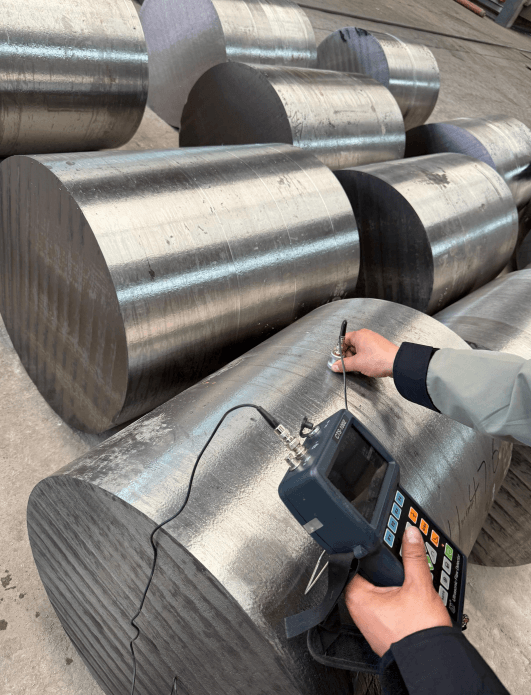
Full heat lot traceability is a non-negotiable requirement for medical-grade production. We source exclusively vacuum arc double/triple remelted (VAR) titanium ingots, with Ti-6Al-4V ELI (Grade 23) per ASTM F136 as the standard specification for permanent orthopedic implants.
All raw ingots undergo ultrasonic testing (UT) for internal flaws per AMS 2631 before entering the production floor. Automated band saws section ingots into billets under continuous coolant delivery, which suppresses localized heat buildup and prevents interstitial absorption of carbon and atmospheric gases — a common risk when processing titanium without medical-grade temperature controls.
Biocompatible Hot Forging & Grain Refinement
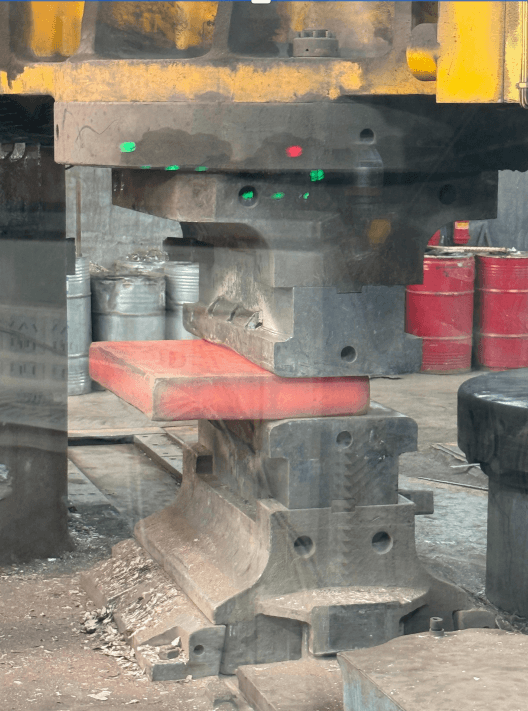
Cast ingot structures have inherent porosity and uneven grain distribution, which directly reduce fatigue resistance — a critical failure point for load-bearing orthopedic implants.
Billets are heated in a controlled clean atmosphere calibrated to avoid alpha-case formation, then forged on heavy hydraulic presses with cyclic reduction. This thermomechanical process crushes and refines the as-cast alpha-beta grain structure, eliminates internal micro-porosity and grain boundary segregation, and delivers isotropic mechanical strength and uniform structural integrity across the full plate cross-section.
Precision Flat Rolling & Flatness Control
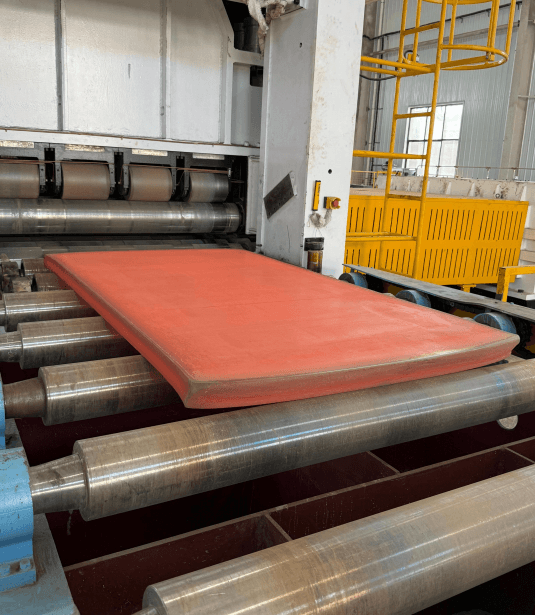
Medical device CNC machining centers require materials with consistent gauge, high flatness, and minimal residual stress. Uneven internal stress will cause part deformation during high-speed machining, leading to scrap and delayed production.
Forged slabs proceed through a multi-pass precision rolling line to reach final target thickness. Vacuum stress-relief annealing is performed between key rolling passes to eliminate directional grain bias and residual internal stress. The finished plates are held to tight medical-grade thickness and flatness tolerances, ensuring consistent geometric stability throughout downstream surgical component fabrication.
Automated Belt Grinding & Surface Conditioning
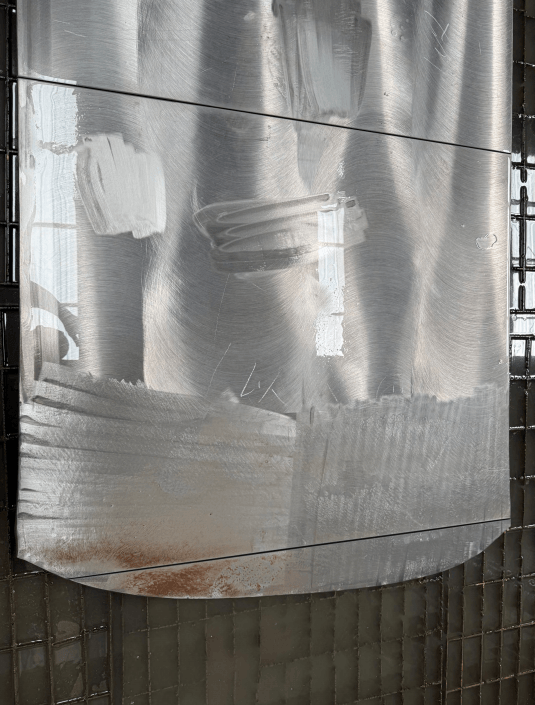
Surface oxidation, mill scale, and micro-cracks can trap biofluids and compromise post-processing treatments such as chemical passivation or anodizing — a direct risk to implant biocompatibility.
After vacuum heat treatment, rolled plates go through fully automated multi-grit belt grinding lines. This sequential mechanical finishing process removes the entire outer oxide layer and surface micro-defects, producing a uniform, pristine metallic finish. This provides an ideal base for subsequent surgical-grade passivation, laser marking, or anodizing.

Dimensional Audit, Bio-Isolation Packaging & Dispatch
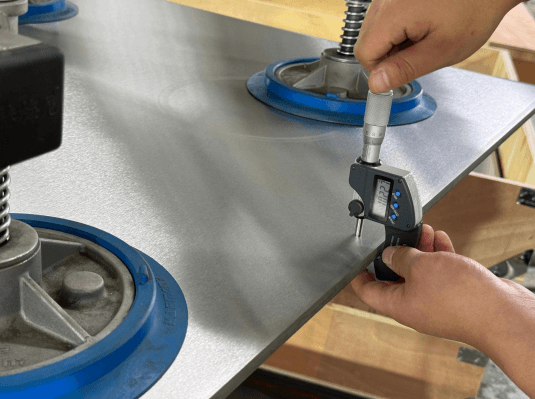
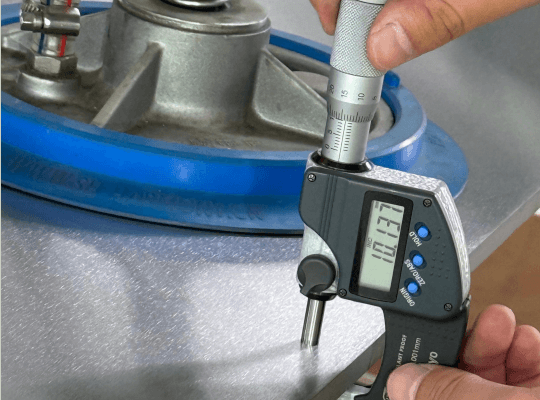
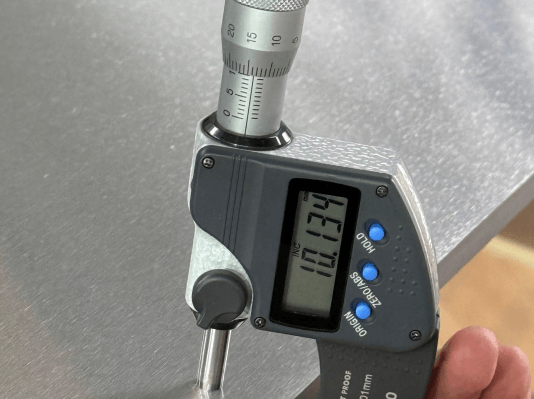
Medical production requires 100% dimensional verification and complete heat lot traceability. Every plate is individually serialized and undergoes a full grid dimensional inspection with calibrated digital micrometers to verify compliance with tolerance specifications.
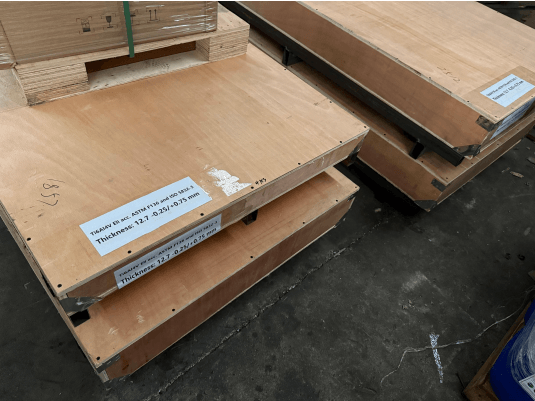
After inspection release, plates are packed in a clean packing zone. To prevent scratches and moisture oxidation during international transit, each plate is separated by high-density anti-scratch interlayer film, vacuum-sealed in a moisture barrier bag, and packed in ISPM 15-compliant export wooden cases. All shipments are dispatched via premium international carriers (e.g., DHL Express) with end-to-end tracking, and include full EN 10204 3.1B certified material test reports (MTRs) with every batch.
From orthopedic load-bearing implants to precision diagnostic equipment components, our production workflow is built around regulatory compliance, full traceability, and consistent material performance. Every batch of LuminaTitan medical-grade titanium plates is validated to meet the strictest international medical engineering standards, reducing incoming audit workload and supply chain risk for our partners.
Technical dossier compiled by LuminaTitan Medical Materials & Quality Assurance Division.
Request full MTR packets, ASTM F136 compliance documentation, or a custom quote for your medical project — our engineering team typically responds within 24 business hours.